Zibo Xunfan Trade Co., Ltd. is a professional export abrasive products company. The company has more than ten years of export experience, mainly engaged in abrasives products sales, the company with its excellent quality and perfect service level to win the trust of customers from all over the world. Company sales of resin cutting disc exported to South America and North America, sand cloth and sandpaper selling in Australia, Southeast Asia and so on.Our abrasive material are mainly used in the production of coated abrasives and bonded abrasives. Abrasive tools are mainly used in the cutting of metal, stone and stainless steel, also used in grinding and polishing of wood, etc.

Why Choose Us
01
Extensive Experience
The company has more than ten years of export experience, mainly engaged in abrasives products sales, the company with its excellent quality and perfect service level to win the trust of customers from all over the world. Company sales of resin cutting disc exported to South America and North America, sand cloth and sandpaper selling in Australia, Southeast Asia and so on.
02
Fair & Competitive Pricing
Our pricing structure is designed to make a modest profit so that we can continue to be a Hero another day.
03
Product Application
Our abrasive material are mainly used in the production of coated abrasives and bonded abrasives. Abrasive tools are mainly used in the cutting of metal, stone and stainless steel, also used in grinding and polishing of wood, etc.
04
Our Service
The company has a professional sales team to provide you with high-quality pre-sales consulting services. In the order production process, customer can communicate with us at any time to keep knowing about the production progress, and also we provide high-quality after-sales service to meet the different needs of customers.

107mm Cutting Disc for Stainless Steel
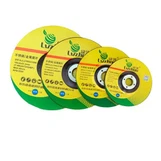
107mm cutting disc for stainless steel also called 107mm cutting wheel and 4" cutting disc for stainless steel, which is made of more economical Selected high quality resin hot pressing molding, both sides of the outer layer using reinforced double mesh design reinforcement, not easy to collapse, not easy to deform, wear resistant and durable in use.

355x2.8x25.4mm cutting disc are one of the most commonly used sizes, to meet the needs of an array of industries and DIY enthusiasts. it is specially being used in cutting stainless steel. which has higher cutting efficiency and higher durable in use.

Super Thin Cutting Wheel for Stainless Steel
Super thin cutting wheel for stainless steel also called super thin cutting disc, which is based on resin as a binder, combined with a variety of materials, cutting performance is particularly significant.

Depressed Center Cutting Wheel
The depressed center cutting wheel also called cutting disc, which is made of good quality alumina material. Its usage is very wide, and depressed center design can make it cutting and grinding.

Cutting wheel for metal also called cutting disc for metal, which is made of glass fiber and resin reinforced bonding material, with high tensile, impact and bending strength, widely used in ordinary metal and steel cutting.

75mm Super Thin Mini Cutting Wheel
75mm super thin mini cutting wheel also called 75mm super thin mini cutting disc, which use resin as the binder, glass fiber mesh as the bones, combined with a variety of materials. Dry, wet two cutting methods.
What is Cutting Wheel for Stainless Steel
Cutting wheel for stainless steel are a type of abrasive tool that is specifically designed to efficiently and effectively cut through stainless steel materials. These cutting wheels possess several unique features and advantages that make them ideal for a range of applications.
Benefits of Cutting Wheel for Stainless Steel
Exceptional Hardness
Cutting wheel for stainless steel are incredibly hard and wear-resistant, making them ideal for grinding other hard materials such as carbide. This feature also allows cutting wheel for stainless steel to withstand high material removal rates and provide better longevity when compared to conventional abrasive wheels.
Superior grinding performance
From rough grinding at high feed rates to cutting brittle materials with highaccuracy, the composition of a diamond grinding wheel can be manipulated to serve a multitude of applications.this diversity stems from the combination of grit size and the concentration (or volume) of diamond grit present in the wheel's bond. If finer grit is used, a higher quantity of grit particles can be included in the wheel bond. If larger grit is used, not as many grit particles will be able to fit into the wheel bond.fine grit is useful for high precision and works well with brittle materials, while coarse grit is ideal for faster material removal.
Low heat generation
The bond structure of a diamond cutting wheel for stainless steel does impact its heat-resistant abilities. Resin bonds, for example, generate the least heat overall during grinding and are typically used for softer materials like ceramics and composites. Known as a more "flexible" Bond, resin bonds have a faster-paced grit renewal rate than metal or vitrified bonds. This allows for a consistent, sharp cutting surface.slightly less heat efficient, metal bonds are typically used for grinding toughermaterials and are much harder than resin bonds. By retaining grit particles for longer, this bond allows the form of the wheel to hold its shape for extended periods.
Reduced wheel wear
The unmatched strength and hardness of synthetic diamonds help maintain sharper cutting edge, resulting in grinding wheels that resist wear and require less dressing throughout a job.cutting wheel for stainless steel can operate for long periods with little to no load-up or glazing. This quality results in more efficient grinding, which means more time cutting and less time dressing a wheel.efficient grinding greatly reduces the risk of damage to the wheel and workpiece, such as burning, chipping, or breaking.
Types of Cutting Wheel for Stainless Steel
A type 1 or Type 41 is the most efficient flat cut-off wheel. It is commonly used for the general cutting of metals. Type-1 cutting wheels have a larger cutting surface and less interference with the workpiece because it doesn't have a depressed center. These wheels are utilized with angle grinders, die grinders, and chop saws (high-speed or stationary saws).
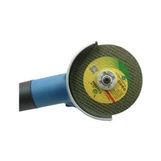
A type 27 or type 42 is a depressed center cut-off wheel. For tight or narrow cutting a depressed center provides more space but also restricts the cutting power of the wheel, especially around corners. Type 27 cut-off wheel is most suitable with the right-angle grinders.
The right angle cut-off wheel is a multi-purpose cutting wheel. These wheels are used to cut concrete, aluminum, steel, tile, stone, angle brackets, metal studs, and other general materials.
A depressed center wheel is mainly utilized for smoothing welds, notching, beveling, cutting pipe, and stone materials.
Small diameter reinforced wheels are mainly used with angle grinders to cut small metal surfaces efficiently.
Application of Cutting Wheel for Stainless Steel
Metal Processing
Cutting wheels are widely used for cutting various metals including steel, stainless steel and aluminum. They are essential for tasks such as cutting metal bars, pipes and plates.
Construction
In the construction industry, cutting wheels are used for cutting concrete, masonry and stone. They are particularly suitable for tasks such as cutting tiles, bricks and concrete slabs.
Car maintenance
The mechanic uses cutting wheels to cut the exhaust system, suspension components and other car parts. They are capable of precise and effective cutting in car maintenance and modification.
Manufacturing
For manufacturing tasks, cutting wheels are invaluable for cutting metal plates, bars, and profiles. They help create the precise cuts required for various manufacturing processes.
How to Choose Cutting Wheel for Stainless Steel

Material, Size, and Thickness
When selecting a Cutting Wheel for Stainless Steel, the material it is manufactured from is an important factor. The abrasive type used in the wheel affects its cutting capability. For instance, wheels made with aluminum oxide are typically used for cutting ferrous metals, while those made with silicon carbide are more suitable for non-ferrous metals. Additionally, the durability and performance of the wheel are influenced by the bonding agents used. Commonly, resin-bonded wheels are chosen for their balanced cutting performance and strength.

Compatibility with Machinery
When selecting a cutting wheel, it's important to consider the type of machinery you'll be using. Different wheels are designed to be compatible with specific machines, such as angle grinders or circular saws. Using a wheel that's not designed for your specific type of machinery can lead to suboptimal performance and may even pose safety risks. The power output and revolutions per minute (RPM) of your machinery are significant factors in choosing the right wheel. A wheel must be able to handle the machine's power and speed. Using a wheel that's not rated for your machine's power output or RPM can be both dangerous and inefficient.

Cutting Pressure and Speed
Applying the right amount of pressure is crucial. Too much pressure can overburden the wheel and the tool, which can lead to premature wear and potential breakage. On the other hand, insufficient pressure can result in an inefficient cut and increased time.The correct pressure should allow the wheel to cut through the metal without forcing it. This balance is key to achieving a clean cut and prolonging the wheel's life.
Process of Cutting Wheel for Stainless Steel
Mixing the ingredients
Preparing the cutting wheel mixture begins with selecting precise quantities of abrasives, bond materials, and additives according to a specific formula. A binder, typically a water-based wetting agent in the case of vitrified wheels, is added to coat the abrasive grains; this coating improves the grains' adhesion to the binder. The binder also helps the cutting disc wheel retain its shape until the bond is solidified. Some manufacturers simply mix all materials in a single mixer. Others use separate steps to mix abrasive grains with the binder.
Molding
For the most common type of cutting wheel, an annular cutting disc, a predetermined amount of cutting disc wheel mixture is poured into a mold consisting of four pieces: a circular pin the size of the finished wheel's arbor hole (its center hole); a shell with a 1-inch (2.5-centimeter) wall, about twice as high as the desired cutting disc wheel is thick; and two flat circular plates with diameter and arbor hole sizes equal to those of the cutting wheel. A variety of methods are used to distribute the mixture evenly. Typically, a straight edge pivots about the center arbor pin to spread the mixture throughout the mold.
Firing
Generally, the purposes of the firing are to melt the binder around the abrasives and to convert it to a form that will resist the heat and solvents encountered during grinding. A wide range of furnaces and kilns are used to fire cutting disc wheels, and the temperatures vary widely depending upon the type of bond. Wheels with a resin bond are typically fired at a temperature of 300 to 400 degrees Fahrenheit (149 to 204 degrees Celsius), and cutting wheels with vitrified bonds are fired to temperatures between 1700 and 2300 degrees Fahrenheit (927 to 1260 degrees Celsius).
Finishing
After firing, wheels are moved to a finishing area, where arbor holes are reamed or cast to the specified size and the wheel circumference is made concentric with the center. Steps may be necessary to correct the thickness or parallelism of wheel sides, or to create special contours on the side or circumference of the wheel. Cutting wheel Manufacturers also balance large wheels to reduce the vibration that will be generated when the wheel is spun on a cutting disc machine. Once wheels have received labels and other markings, they are ready for shipment to the consumer.
Installation
Make sure that spindles, back plates and flanges are always clean before installing a new wheel. Use a dial indicator to check that the rotation of the wheel is within 0.0005 inch, 12.7 microns, of true. Tighten the flanges once the wheel is true and double-check tightness before use.Diamond cutting wheels should only be used to make straight cuts. Twisting or jamming the wheel can cause fatigue and segment loss. Excess pressure should not be applied when making cuts. When performing any cutting or grinding process, all work materials require firm support. Excess overhang should be avoided; even slight tilting can create an angled cut.
Feed and grinding speed
Material must be fed into the wheel at the appropriate speed. A feed rate that is too fast will cause chatter and vibration. This will result in a poor cut and possibly damage the cutting edge of the wheel.Diamond wheels work best at speeds between 5,000 to 6,000 surface feet per minute. Running at lower speeds can lead to glazing.
Dressing
Using the wrong cutting wheel, one with a bond that is too hard for the working material, will create glazing. The easiest way to avoid this is using a blade that is matched to the material. Dressing the blade is a maintenance technique, but dressing does slow down production and reduce the life of the wheel.Dressing a diamond wheel cleans the build up of debris from cutting operations that block the abrasive surface. The resurfacing restores the sharp abrasive edges of the diamond coating. A dressing stick, normally aluminum oxide or silicone carbide, is used to cut through or remove the debris and expose new diamond material.
Overheating
Coolant should be used for maximum results. The coolant needs to spray to contact where the cutting wheel and material meet. A weak soluble oil solution may be used to reduce corrosion.If dark streaks form along the sides of the cutting edge, the wheel is being overheated. Excess heat can cause the wheel to break apart. If dry cutting is being performed, allow the wheel to cool for about 10 seconds for every 30 seconds of cutting operation.
Factory Pictures


FAQ
Hot Tags: cutting wheel for stainless steel, China cutting wheel for stainless steel manufacturers, suppliers, factory, Black Silicon Carbide, Turbo Fiber Disc, 2 Inch Mini Sanding Cloth Disc, more durable cutting wheel for stainless steel, Sanding Disc with Velcro, cutting and grinding abrasive hardwear for metal