

Abrasive Material
Company Profile
Zibo Xunfan Trade Co., Ltd. is a professional export abrasive products company. The company has more than ten years of export experience, mainly engaged in abrasives products sales, the company with its excellent quality and perfect service level to win the trust of customers from all over the world. Company sales of resin cutting disc exported to South America and North America, sand cloth and sandpaper selling in Australia, Southeast Asia and so on.
Why Choose Us
100% Satisfaction Guarantee
We're so confident you'll be happy with our services, we guarantee it.
Extensive Experience
Our team of professionals have been in the business for quite some time. Let us deliver solutions that work the first time!
Fair & Competitive Pricing
Our pricing structure is designed to make a modest profit so that we can continue to be a Hero another day.
-
 Brown Aluminum OxideBrown fused alumina (BFA) also called brown aluminum oxide and brown synthetic corundum, –Add to Inquiry
 -
 White Fused Alumina AbrasiveWhite fused alumina abrasive, also called white aluminum oxide or WFA abrasive, is produced byAdd to Inquiry
 -
 Brown Fused Alumina ManufactureBrown fused alumina, also known as brown aluminum oxide or brown corundum, is an industrialAdd to Inquiry
 -
 Black Silicon CarbideBlack silicon carbide contains about 98.5% SiC, its toughness is higher than green silicon carbide,Add to Inquiry
 -
 Brown Fused Alumina 36Brown alumina 36 is a type of alumina, which is a chemical compound consisting of aluminum oxide.Add to Inquiry
 -
Brown Fused Alumina 36Brown Fused alumina 36#, also known as Brown Corundum 36# or brown aluminum oxide 36#, is a typeAdd to Inquiry
-
 Pink Fused AluminaPink Fused Alumina (PA) is a high-performance abrasive material known for its superior hardness,Add to Inquiry
 -
Black Silicon CarbideBlack Silicon carbide (SIC) is made of quartz sand, petroleum coke, wood chips and other rawAdd to Inquiry
-
 Green Silicon CarbideGreen silicon carbide is made of petroleum coke and high quality silica as the main raw materials,Add to Inquiry
 -
 White Aluminum OxideWhite fused alumina (WFA) also called white aluminum oxide or white synthetic corundum, which is aAdd to Inquiry


- Mob: +8613361403292
-
WhatsApp:+8613361403292
-
wechat: +8618560921569
- Email: yfabrasive@163.com
- Add: Room 7307 Hongyi Chuanggu, Huahong Publishing Industrial Park, No.7 Minxiang North Road, High-Tech Zone, Zibo City, Shandong Province.
Advantages of Abrasive Material
Refractory/Fireproof
Abrasive raw materials contain 94%-99% Aluminum Oxide (Al2O3) which makes it an material which resists high temperature, corrosion and has good thermal conductivity. It is an ideal raw mineral for shaped and unshaped refractory products and fireproof products, especially in steel making industry.
High Hardness
Abrasive material has about 99% Aluminum Oxide (Al2O3) which makes it have high hardness (Mosh 9). High hardness makes it an ideal material for cutting, polishing, grinding, sand blasting etc with more recycle times and not easy to break.
High Strength
Abrasive material contains Al2O3 and little content of Titanium Oxide(TiO2) and Iron Oxide(Fe2O3) and is a very tough material with 9 grade mosh hardness. This character makes it good for cutting, abrasives, polishing, lapping of various materials and can be used durably and recycled.
High Density
Abrasive material is a dense material with high bulk density and true gravity. It is used as a material in casting and water purifying processes.

An abrasive is a material, often a mineral, that is used to shape or finish a workpiece through rubbing[1] which leads to part of the workpiece being worn away by friction. While finishing a material often means polishing it to gain a smooth, reflective surface, the process can also involve roughening as in satin, matte or beaded finishes. In short, the ceramics which are used to cut, grind and polish other softer materials are known as abrasives.
Application of Abrasive Materials
Abrasive materials are commonly used to polish workpieces. Polishing is an aggressive process that involves using an abrasive to smoothen the surface of an object. This process improves the appearance of an object. In addition, it prevents corrosion and oxidation. Commonly polished workpieces include kitchenware, handrails, and architectural metals.
Grinding wheels used for grinding are usually made from abrasive materials. They are used as cutting tools. In these cutting tools, each grain of abrasive material acts as a single-point cutting edge. For this reason, grinding is also referred to as abrasive cutting.
Drilling is a process that involves making a hole in a hard surface. It is also considered a cutting process. The drill bit used in making a hole is usually made from abrasive materials. These abrasive materials create the sharp edge necessary for drilling. A wide range of materials can be drilled. These materials include metals, wood, and plastic.
Lapping is a process that involves rubbing two surfaces together with an abrasive between them. Lapping is usually used to create an accurate surface texture. This process usually comes after grinding.
Honing is a process used to improve the geometric form of an object. In this process, an abrasive is scrubbed against metal in a specified path. Hone is the tool used for honing. It is usually made up of abrasive grains held together by an adhesive.
Top Tips for Choosing the Right Abrasive Materials


Quality – The quality of abrasive materials today can be extremely variable. By varying the properties of the abrasive and bond and the makeup of the wheel it is possible to produce grinding wheels with a varied range of grinding characteristics. Stock removal performance is a great metric to ensure you are purchasing the most suitable abrasive for the job.
Time – The right abrasive materials needs to save you time on a particular job or element of the process and this can then be turned into a quantifiable cost saving, which means resource can be placed elsewhere.
Specialist Applications– There is not a 'one size fits all' approach when it comes to abrasive materials. There are different abrasive materials for specific materials, so don't just go with generic, it will result in a poor finish, short lifespan and extra costs elsewhere such as slow turnaround on jobs. Why not have the best product for that particular application rather than a 'jack of all trades', it may cost more than the generic option, but will be more profitable in the long term.
Revolutions Per Minute (RPM) – Setting the correct RPM when using your tools for the job in question will help ensure good tool life and the longevity of your abrasive materials.
Cost – Cheapest is not always the most cost effective, you need to consider the lifetime value. If you purchase a cheap alternative, but have to replace frequently then it's probably costing you more than it should.
Procurement – Consider what material, what application and what tool drive, all of these elements go hand in hand when selecting the best abrasive product.
Not just a bolt on – Abrasive materials are not simply the end point of the process with something bolted on the tools, they are an extremely important factor. Why go to the trouble of buying the best possible tool and then putting the cheapest, low quality abrasive on it. It's like the analogy of buying a high-end supercar and putting remould tyres on it, don't be tempted, it was cause problems in the long run.
Ease of use – Consider ergonomics, lower vibration, reduced noise and dust, these all make the job easier, plus it helps in regards to compliance and health and safety issues.
Specialist applications – Special metals require special abrasive products, you may need to look at something bespoke rather than off the shelf in some instances.
Feedback – Team work is key, the decision of tool drive and the abrasive on the end of it need to be looked at as a team to ensure buy-in.
Common Industrial Abrasive Materials
Diamond
Diamond is the hardest material known to man. This makes it ideal as an abrasive material. Diamond grains are fixed on cutting tools to improve their efficiency. Cutting tools made with diamonds have a high wear resistance and long lifespan. However, diamond is an expensive abrasive material.
Aluminum Oxide
Aluminum Oxide is another common abrasive material. It is an extremely hard mineral and produces excellent results when used as an abrasive material. This material is more cost-effective than most other abrasive materials. It also produces little to no dust residues when used on a surface. This is not often the case with other abrasive materials.
Silicon Carbide
Silicon carbide is a sharp and hard abrasive material. It is one of the two most commonly used abrasive materials. The other is aluminum oxide. Silicon carbide is brittle and susceptible to wear. Therefore, it is not durable. This abrasive material is usually ideal for non-metallic and low-tensile strength surfaces.
Cubic Boron Nitride
Cubic boron nitride is an excellent abrasive material. It is almost as efficient as diamond and is the second hardest known material. In addition, this abrasive material is stable and can withstand high temperatures. This means that cubic boron nitride can be used for high-speed applications.
Abrasive Materials and Wear in Separation Technology
Decanters and separators often process products with granular, abrasive properties. Continuous or long-running processes allow them to grind off material. The result is wear. In order to reduce this effect, operators use wear protection measures. Examples of coatings and materials are:
● Deposition welding or powder armoring
● Glued ceramics
● Tungsten carbide soldered or screwed in place
● Hard cast glued in place
● Plastic screwed or glued in place
How Can I Transport Abrasive Materials Safely?
To achieve the most appropriate handling solution, precise data on the abrasive materials you use must be supplied to your equipment provider to allow for suitable design. One of the best ways to move abrasive materials safely is to use a job-specific pendulum bucket elevator (instead of a loose-product conveyor belt).
What is a pendulum bucket elevator?
A pendulum bucket elevator runs at a slower speed than belt and bucket types, minimising wear and allowing more careful handling of abrasive materials. To further minimise the risk of damage, at Gough Engineering we construct our buckets from durable stainless or carbon steel or a polypropylene type (food grade if required) with option of metal detectable material.
Feeding controls
Feeding controls also play an essential role in handling abrasive materials safely, in two ways:
1) By avoiding bucket overloading and spillage around the product delivery inlet points.
2) By managing the secure and safe transfer of product from the bucket elevator at the tipping point. Depending on your processing requirements, tips may be gradual and selective, single, or multiple.
Customisation
Bucket elevators intended for abrasive materials may need further customisation to enhance safety around the loading and transfer points. Dust control is such a consideration, as the dust from abrasive products may damage machinery and cause a health hazard to operators. Care should be taken to minimise dust proliferation during loading and transfer, and you may require additional dust covers or dust extraction equipment incorporated into your design.
Classification of Abrasive Materials
Abrasive materials are classified according to the hardness of their raw materials (measured on a scale, most commonly the Mohs Hardness Scale), as well as their brittleness (or friability) and toughness:
- Hardness refers to the resistance of one material to the pressure of another.
- Friability describes the ease with which a material can produce new forms when its mineral product breaks down.
- Toughness indicates the amount of energy a material can withstand before breaking.
- Each of these variables affects the final result: choosing the right abrasive is crucial, which is why using abrasives is a task for professionals.
What Are the Different Types of Abrasive Materials?
Abrasives can be classified according to whether they are natural or synthetic:
Natural Abrasives: Many of these are minerals, including the widely used quartz and diamond. Quartz in particular ranks 7/10 on the Mohs scale and is used in many types of sandpaper, for example.
Synthetic Abrasives: These are created via industrial chemical processes, which involve heating the materials to over 2000 degrees. Synthetic abrasives include high quality materials such as silicon carbide and aluminum oxide, as well as the widely used synthetic diamond.
In addition, there is third category known as bonded abrasives. These are made by bonding abrasive particles with a resin or other bonding material, and are often used in polishing and precision grinding.
What Is the Production of Abrasive Materials?
Abrasive materials are of natural or synthetic origin. They are distinguished mainly by their degree of hardness. It is said that one material is able to abrade another when one touches the other at their contact. Their degree of hardness is measured using special scales.
The hardest abrasive material present in nature is the diamond. There are also other materials of both natural and synthetic origin, such as silicon carbide, corundum and zirconium. These do not reach the same hardness as the diamond, but they are very close to it.
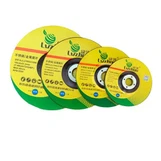
To make an abrasive materials, a support is needed to adhere the abrasive powder. The most used supports are paper or canvas. Resin or glue is then used to fix the abrasive. The main abrasive tools are made this way. Examples are abrasive paper sheets (also known as sandpaper), abrasive strips and more. To create complex instruments such as discs and flap wheels, slightly more complex procedures are required which involve the use of industrial machinery.
What they are used for and how they are used
Abrasive materials are mainly used for industrial processing. They are particularly important in the metallurgical and automotive sectors. Many common objects are made thanks to the use of abrasives. Try to think of the bodywork of a car. The pieces that make up a car are welded together, creating burrs in the metal junction area. The removal of welding burrs is an action that takes place through the use of abrasive materials.
On the other hand, artisans and professionals also use abrasives to perform certain operations. For example, carpenters and carpenters use the abrasive to smooth and finish parquet surfaces. Furthermore, there are widespread artisan artists who use abrasives to create furnishings or works of art. The artists shape and cut stainless steel thanks to abrasives. With the right tools you can create extraordinary works of art. The abrasive is the ideal means to refine these works. Thanks to the abrasive it is possible to give the finished works an imperfection-free finish and obtain a glossy or matte surface according to your needs.
Shape, grain and size
Different abrasive materials instruments correspond to different types of processing, and for this reason there are discs, wheels, wheels, cutters and various files. They differ mainly in shape, size and grain.
Choosing the right abrasive shape is essential for working a surface. Using the most suitable abrasive helps considerably to achieve the desired result. For example, both flat and conical abrasive discs can be used on flat surfaces. The first offers a more aggressive abrasion on a narrow surface, while the second allows you to work on a larger surface and with greater precision. To work on corners or shaped surfaces it is recommended to use cup-shaped abrasives.
The grit thickness of an abrasive affects the cleaning speed and the pattern produced. abrasive materials with a grain between 8 and 16 are generally very rough. They are suitable for giving the surface a deep pattern. From 20 to 40 (medium grain) abrasives are considered for general and very varied purposes. Finally, the abrasives with grain from 120 up are those with a fine grain and are mainly used for finishing.
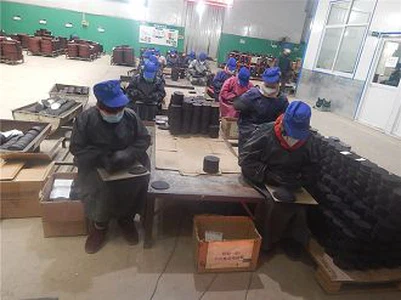
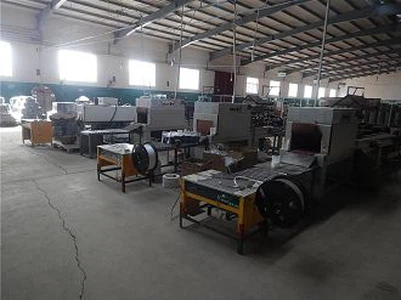
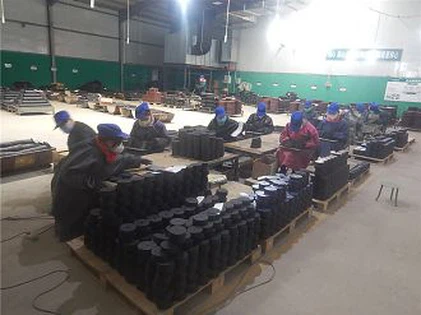
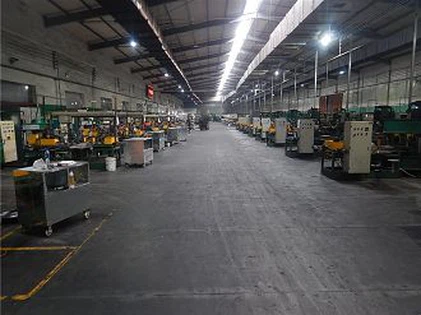
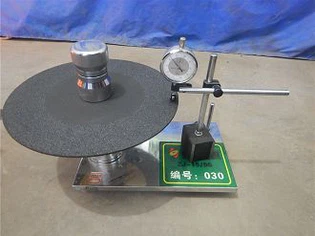
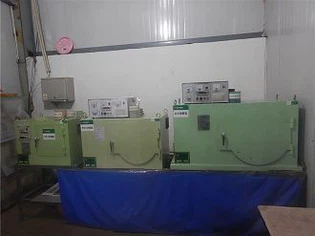
Our Factory
Zibo Xunfan Trade Co., Ltd. is a professional export abrasive products company. The company has more than ten years of export experience, mainly engaged in abrasives products sales, the company with its excellent quality and perfect service level to win the trust of customers from all over the world. Company sales of resin cutting disc exported to South America and North America, sand cloth and sandpaper selling in Australia, Southeast Asia and so on.




FAQ
Q: What is abrasive materials?
Q: What are the three most common abrasive materials?
Q: What is the strongest abrasive material?
Silicon Carbide: Silicon carbide is the hardest abrasive blasting material available, making it the best choice for your most challenging surface finishing applications. It is available in various colors and purities.
Q: What is the most commonly used abrasive material?
The most common abrasive used is aluminium oxide. Also common are silicon carbide, tungsten carbide and garnet. Artificial sharpening stones are often a bonded abrasive and are readily available as a two sided block, each side being a different grade of grit.
Q: What is the raw material of abrasive?
Q: What is the softest abrasive material?
Q: What is the best abrasive material for metal?
Q: What type of abrasives is used for grinding of tough materials?
Aluminium Oxide: Aluminium oxide is tough and fracture-resistant; It is preferred for grinding of materials of higher tensile strengths like steel; high carbon and high-speed steel and tough bronze.
Q: What is the best abrasive material for wood?
Q: What abrasive is best for aluminum?
Q: What is the best abrasive material for aluminum?
Q: What two abrasive materials are most generally used for grinding wheels?
Q: Which type of abrasive material is used for lapping hardened steel?
Q: What are the three most common abrasive materials?
Q: What is the most common abrasive material?
Q: What type of abrasives is used for grinding of tough materials?
Aluminium Oxide: Aluminium oxide is tough and fracture-resistant; It is preferred for grinding of materials of higher tensile strengths like steel; high carbon and high-speed steel and tough bronze.
Q: What is the softest abrasive material?
Q: What two abrasive materials are most generally used for grinding wheels?
Q: What are abrasive materials at home?
Physical abrasives include sandpaper, plastic and nylon meshes, scrubbing pads, and steel wool.
Mineral abrasives are composed of particles. Baking soda, powdered borax, and salt are all examples of mineral abrasives that are considered natural cleaners.
Chemical abrasives are also composed of particles.
Q: What is an example of an abrasive material?
We're well-known as one of the leading abrasive material manufacturers and suppliers in China. If you're going to buy high quality abrasive material at competitive price, welcome to get more information from our factory.
White Aluminum Oxide, Pink Fused Alumina, Brown Aluminum Oxide