

Flat-shaped grinding wheels have a wide range of applications. Depending on their dimensions, they can be used for internal grinding, external grinding, surface grinding, centerless grinding, tool cutting, slotting, and free grinding. Flat-shaped grinding wheels with curved edges are used for grinding curved surfaces such as tap grooves and bearing raceways.
1. Double-beveled Type 1 grinding wheels are primarily used for grinding gear tooth surfaces and single-lead threads.
2. Double-bevel Type 2 and Type 3 grinding wheels are primarily used for external grinding while simultaneously grinding end faces.

3. Single-bevel Type 1 grinding wheels are commonly used for grinding various saw teeth.
4. Single-bevel Type 2 grinding wheels have an angle less than 300 and are used for sharpening various milling cutters, reamers, broaches, etc.

5. Single-convex grinding wheels are designed primarily for easy flange mounting on large-diameter, thin-section wheels. Their applications are identical to parallel grinding wheels.

6. Single-concave grinding wheels are used for internal cylindrical and flat grinding; larger-diameter versions are used for external cylindrical grinding.
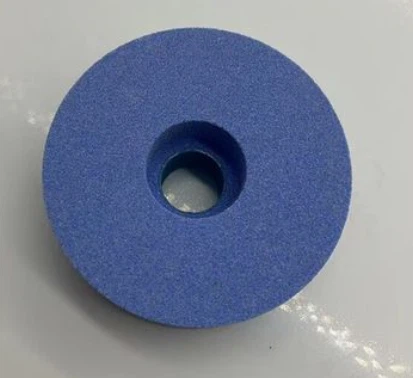
7. Double-concave grinding wheels are used for external grinding and tool sharpening, as well as for grinding wheels and guide wheels in centerless grinding machines.

8. Single-concave tapered grinding wheels are used for external grinding combined with end-face grinding.
9. Double-sided concave tapered grinding wheels are used for grinding external diameters while simultaneously grinding both end faces, such as when grinding crankshaft journals.
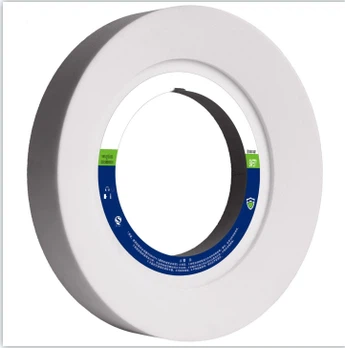
Thin grinding wheels are used for cutting and slotting according to different process requirements.
10. Cup grinding wheels are primarily used for grinding milling cutters, reamers, reaming drills, broaches, paper cutters, tobacco cutters, etc., and can also be used for flat and internal grinding.

11. Bowl-shaped grinding wheels are typically used for sharpening milling cutters, reamers, broaches, disc-shaped turning tools, gear hobbing cutters, and reaming drills. Bowl-shaped grinding wheels with an external wall angle of 50° can grind inclined planes, such as machine tool ways and tool holders.

13. Dish Grinding Wheels Includes Disc No. 1, No. 2, and No. 3 grinding wheels. Disc Type 1 is suitable for grinding milling cutters, reamers, broaches, and other tools. Disc Type 2 can grind involute gear cutters. Disc Type 3 is primarily used for grinding gears.

14. Oilstones are abrasive tools for manual grinding or use in specialized grinding machines. Based on application characteristics, oilstones are categorized into standard, double-sided, honing, and super-finishing types.
15. Standard oilstones come in square, rectangular, triangular, knife-shaped, cylindrical, and semi-circular forms. They are widely used for manual sharpening of various tools, molds, and components.
16. Double-sided oilstones feature a rectangular shape. Leveraging the differing materials, grit sizes, and hardness on both sides, they are used for sharpening tools and cutting instruments.
17. Honing oilstones come in square or rectangular shapes. Mounted on various honing machines, they are used for honing cylinder blocks in automobiles, tractors, aircraft, air compressors, and similar equipment.
18. Super-Finishing Oilstones: Square, rectangular, or irregular shapes. Widely used for super-finishing precision components like bearing races, rollers, internal combustion engine crankshafts, camshafts, machine tool guideways, precision measuring instruments, and electronic devices.

19. All types of grinding wheels are assembled from multiple segments for flat grinding operations.
After reviewing these options, which grinding wheel do you require? For inquiries or assistance, please contact me directly:


